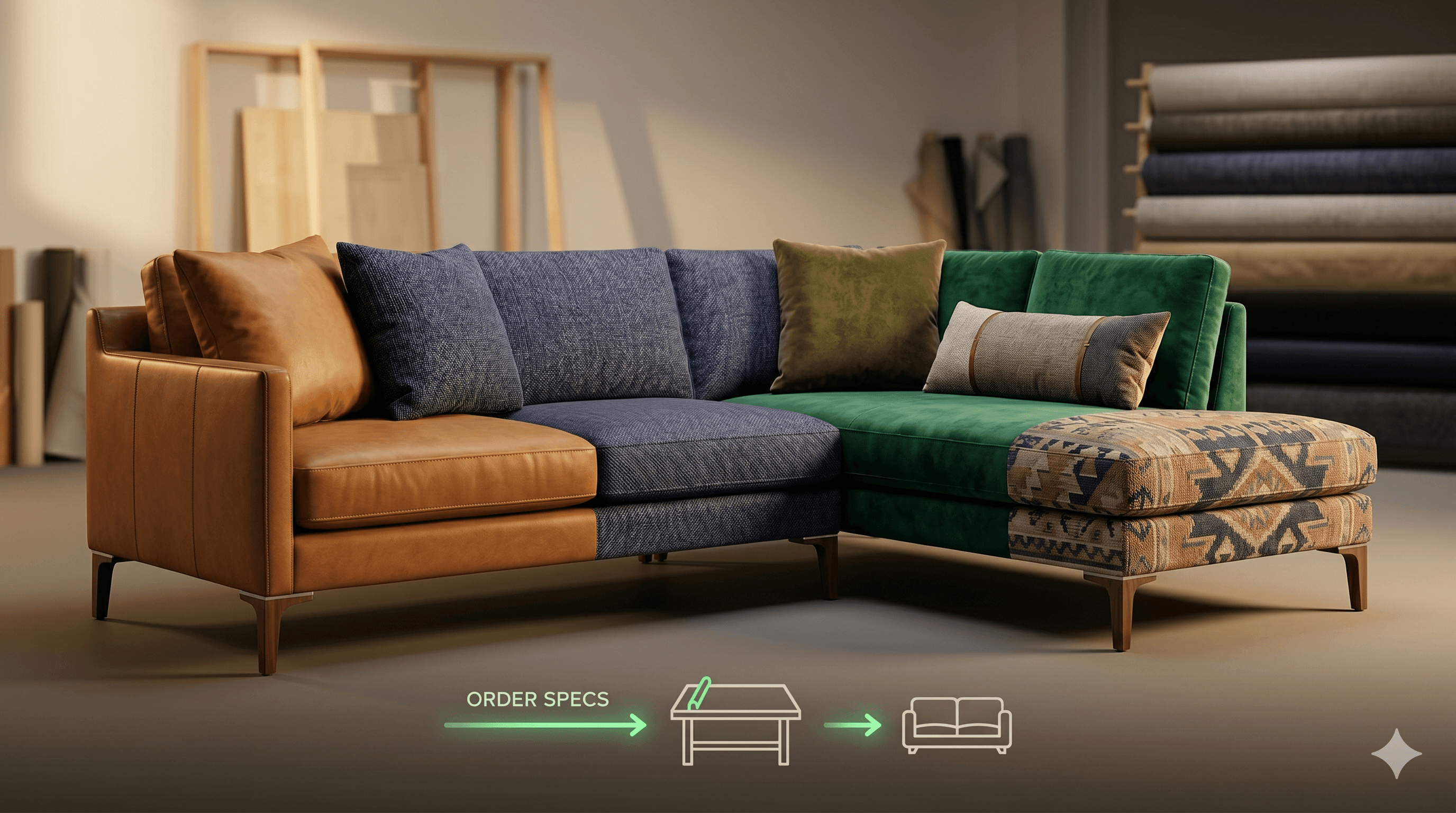
The Custom Sofa Paradox
Picture the loading dock of a thriving home furniture brand. The scent of fresh pine, industrial adhesive, and premium leather fills the air. The sales numbers look fantastic on the revenue dashboard. But step off the showroom floor and look over by the cutting station. You will likely find a panicked production manager holding a stack of printed emails, frantically trying to confirm if Mrs. Higgins’ Lawson sectional needs the performance-velvet or the oat-linen fabric.
This is what I call the Custom Sofa Paradox.
Today's consumers demand exactly what they want. They click a few buttons on a website, choosing from 400 fabrics, 5 leg styles, and 3 cushion fills. Sales promises a seamless delivery. Production is tasked with actually building it. But the pipes connecting the digital showroom to the physical cutting floor are completely broken.
It is like telling your grandkids they can build their ultimate custom ice cream sundae, but keeping the ice cream in the basement, the sprinkles locked in the garage, and the chocolate syrup at the grocery store. By the time you coordinate the retrieval of every ingredient, the base is melted. In a factory setting, when the front-end promises infinite choice, the back-end usually defaults to infinite chaos.
When an order drops, the gears immediately grind to a halt. A customer service rep manually copies the details from a Shopify cart into an ERP system. A floor manager physically checks the warehouse for the right hardware. A scheduler updates the woodshop queue. Are your highly skilled production managers acting as "Human Glue" just to keep things moving? Are your buyers effectively functioning as "Data Janitors," scrubbing and moving specs from one silo to another? You are paying for craftsmanship, but you are getting data entry.
Furthermore, these manual hand-offs force factories into a trap I constantly challenge: Synchronous Logic. Think about how you cook a big Sunday dinner. You don't wait for the roast to finish resting before you begin peeling the potatoes. But in custom furniture manufacturing, factories do exactly this. They wait for a specific custom leather to clear customs before they even instruct the woodshop to cut the base frame. Why? Because the order details are trapped in a static document, and the human managing it can only monitor one traffic jam at a time.
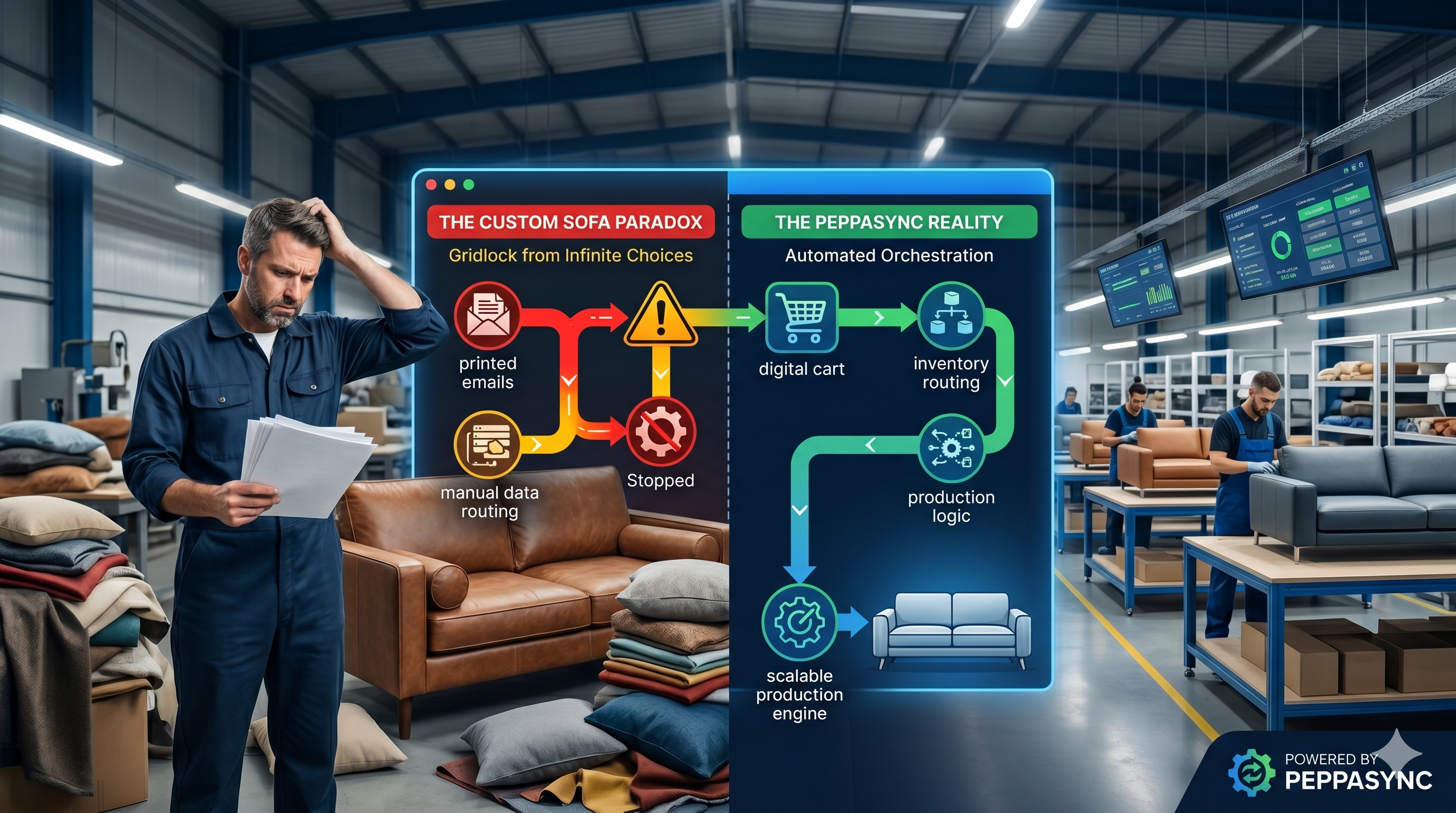
You cannot scale a bespoke operation by throwing more bodies at a broken process. You scale by fixing the plumbing. You need an engine that governs the flow of information from the checkout cart directly to the saw blade, orchestrating every step in parallel.
💎 Spreadsheet Reality vs. Peppasync Reality
| The Custom Sofa Process | Spreadsheet Reality | Peppasync Reality |
|---|---|---|
| Order Intake | Manual export of options from checkout cart to CSV file. | Clean data injection directly from the cart to the production queue. |
| Inventory Routing | A buyer checks three different supplier portals for fabric. | Real-time orchestration of materials, reserving stock instantly. |
| Production Logic | Waiting for fabric to arrive before cutting the wood frame. | Parallel routing: frame is cut while fabric is in transit. |
| Floor Management | Printed tickets handed off between framing, upholstery, and QA. | Automated workflows governing each station's specific build specs. |
| Status Updates | Support emails the floor manager to ask "is it done yet?" | Live telemetry piped straight to the customer dashboard. |
When you stop relying on humans to bridge the gaps between your disconnected systems, the noise on the factory floor disappears. You don't need another flashy app to manage your other apps. You need industrial-grade pipes that route the right material specs to the right station at the exact right second.
By injecting automated orchestration into your supply chain, you eliminate the gridlock. Peppasync handles the heavy lifting so your gears never stop turning, allowing your team to get back to what they do best: building great products. We don’t sell a software subscription; we sell a factory that finally works.